

I sat in on a meeting recently with developer Brian Gibb about the old naval base site in the Bywater.
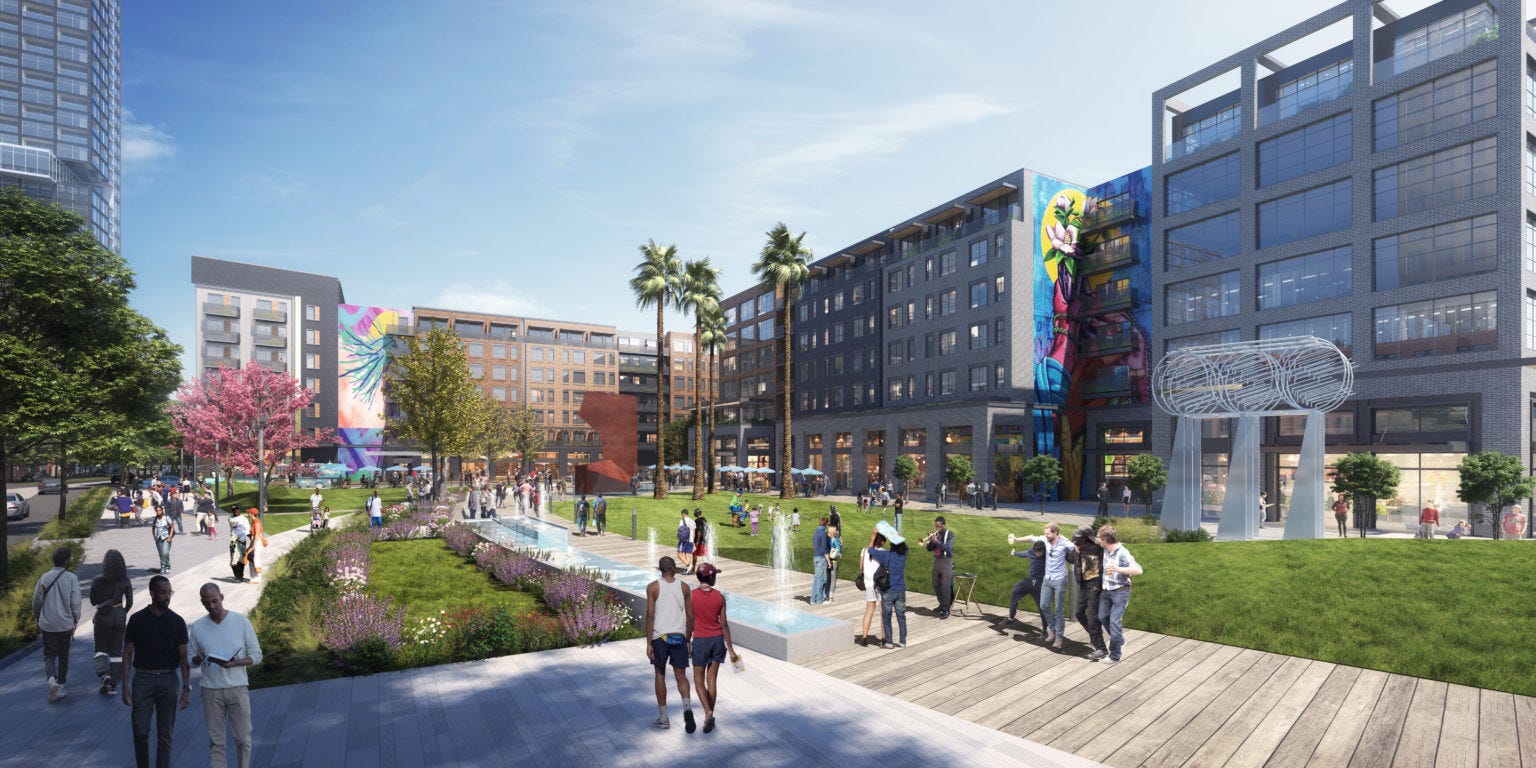
The River District is a planned 40-acre redevelopment along the New Orleans riverfront that aims to create a new mixed-use neighborhood with housing, retail, jobs, and public space, connecting the Convention Center area to surrounding neighborhoods.
A few big takeaways:
The site is massive (~20+ acres, with buildings around 500,000 sq ft each...!)
Phase 1 is roughly 294 affordable housing units + retail + an innovation hub
There’s a broader vision of turning it into a mixed-use campus with jobs, housing, and public space
There’s also the NewLab startup / industrial innovation hub tied to energy and tech (we talked about that a couple of months ago)
There’s a recent NOLA.com article calling this project a “blueprint for growth”, and I think that framing is actually interesting, not because of the buildings themselves, but because of what it’s trying to be.
The real question (to me):
Can this actually become a “place”… or does it end up feeling isolated?
If you’ve been down there, you know what I mean:
It’s tucked into a corner of the city
Not exactly on the way to anything
Limited natural foot traffic
Even in the meeting, people brought this up:
How do people actually get there?
Will transit be improved?
Does it connect to Crescent Park / bike paths in a real way?
The vision isn’t just apartments.
It’s:
housing (income-restricted units)
ground-floor retail
job creation / innovation space
eventually something like a pedestrian “destination” with restaurants + activity
Basically… trying to create a mini district from scratch.
And to be fair, that’s the same kind of language you’re seeing more broadly in New Orleans right now, mixed-use, connected neighborhoods, jobs + housing in the same place, etc.
Why I think this is a real test is that we don’t have many examples locally where this fully works at scale.
New Orleans does well with:
organic corridors (Magazine, Freret, etc.)
existing neighborhood cultures
But building a destination from scratch in a somewhat isolated location?
That’s a different challenge.