

I’ve had a handful of people ask me about the property tax news this week, and most of the headlines make it sound like something already passed. It hasn’t and here’s how it works.
You don’t get a vote here, but you do get a voice. You can speak at the November 5th hearing or call your council member before then and tell them which ones you’d push to the max and which ones you’d leave alone.
You already voted on these.
Every millage in this conversation was approved by New Orleans voters at some point, each with a maximum rate. Over the years, the city has been collecting less than that maximum.
What’s on the table now is called a ‘roll forward’. That just means the city raises a millage back up toward the ceiling voters already approved. Since we already said yes to that ceiling, it doesn’t go back on the ballot.
So it’s not a new tax and it’s not a public vote, the council decides.
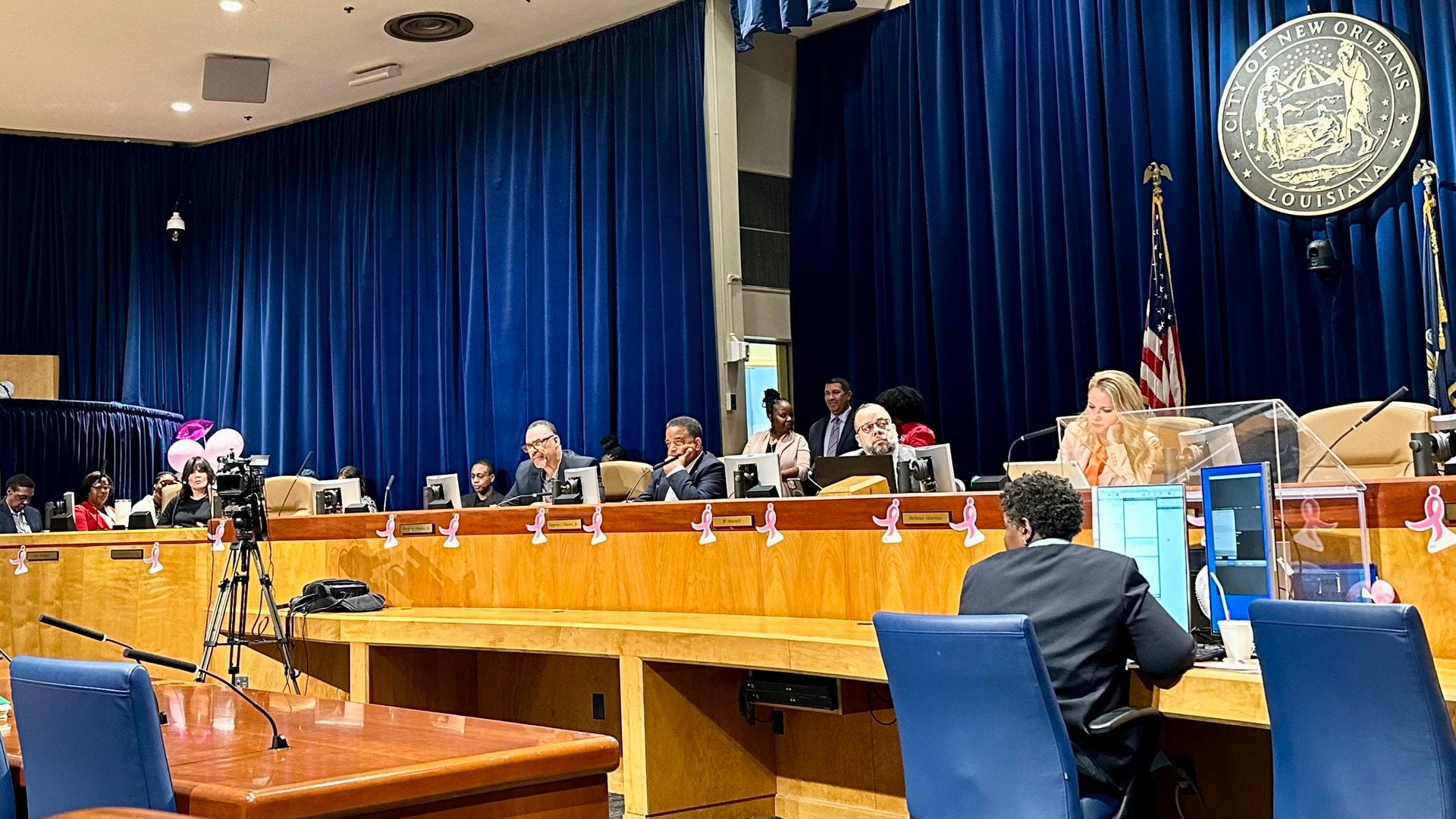
All seven council members vote, and it takes five yes’ to roll any single millage forward. The public hearing and vote are November 5.
Here’s the deal, they can roll forward all of them, some of them, part of one, or none. Each one is its own call.
You don’t get a vote here, but you do get a voice. You can speak at the November 5th hearing or call your council member before then and tell them which ones you’d push to the max and which ones you’d leave alone.
Why now?
The city is looking at a roughly $100 million hole in the 2027 general fund. The proposed budget already has about $77 million in cuts. The city says rolling millages forward could take as much as $21 million off those cuts. Rolling forward everything on the list would bring in about $42 million.
Some cuts are coming either way.
Run your own number
The city put out a calculator that’s genuinely useful. Plug in your property’s market value, add your homestead exemption if you have one, then pick which millages to roll forward. It gives you the monthly and annual cost.
For a ballpark, the city’s own example is a $300,000 homesteaded house with three of these millages rolled forward. That comes out to about $101.83 a year, a little over $8 a month. Yours will depend on your value and which ones pass.
If you own rental property, run it without the homestead. You’ll pay more per mill, and that cost usually finds its way into rent.
What each one pays for
General fund.
Two millages feed this one, and it covers the city’s day-to-day operations. Rolling both all the way forward adds 1.82 mills and brings in about $10 million. It’s the most flexible money on the list and the most direct way to soften cuts.
Police and fire.
Voters approved 5 mills for police and 2.5 mills for fire back in 2016. The police side pays for hiring and equipping officers. The fire side went toward the back pay and pension settlement owed to firefighters. One thing to know: homestead doesn’t apply to this one, so you pay on full value even on the house you live in. More info here.
Platoon.
This is the old one, about a hundred years old. It pays for the fire department’s double platoon system and the police department’s triple platoon system, plus pay for both. Basically, it’s what keeps enough shifts staffed to cover the city around the clock. It can’t be spent on anything else. More info on this here.
Parks.
Voters passed 6.31 mills in 2019 with about 76% support, running through 2040. It’s split between NORD, Parks and Parkways, City Park, and Audubon. NORD’s share goes to programs. Parks and Parkways uses its share to keep up green space. More info found here.
Library.
Renewed in 2021 with 70% support for 20 years. This is the cleanest example of how a roll forward works. Voters approved up to 4 mills, and the city has been collecting less than that. This millage covers more than half of the library system’s budget.
Early childhood.
Approved in April 2022, 61% to 39%, 5 mills for 20 years. It funds City Seats, around 1,000 seats a year at 40-plus centers for kids from birth to age three. Every local dollar here also pulls in a matching dollar from the state. More info found here.
So...
If you own a home in Orleans Parish, take two minutes and run your address through the calculator. Figure out which of these you’d actually pay for. Then, if you have an opinion, the place to share it is the November 5 hearing or your council member’s office, not the ballot box.
City Council Chamber, New Orleans City Hall, 1300 Perdido Street, New Orleans, LA 70112. That’s where council meetings are held. nola
For written comments before the hearing, the Clerk of Council is the official intake point: City Hall, Room 1E09, 1300 Perdido Street, New Orleans, LA 70112, (504) 658-1085, clerkofcouncil@nola.gov.
I’m Philip Ewbank. I sell real estate in New Orleans and on the Northshore, and I’ll keep tracking this through the vote.
🏠🏠🏠🏠🏠🏠🏠
Philip Ewbank, Realtor | Keller Williams Realty New Orleans
8601 Leake Ave, New Orleans, LA 70118
C: 504.335.7481 | O: 504.862.0100
Each office independently owned & operated. Licensed in the state of Louisiana. License #0995700196
Thanks Phil for explaining this so clearly. I've been confused and of course you made it make sense.