

When you make an offer on a home in New Orleans, you’re eventually going to hear the phrase “earnest money deposit.” Here’s what it actually is and how it works under Louisiana’s purchase contract.
What is it?
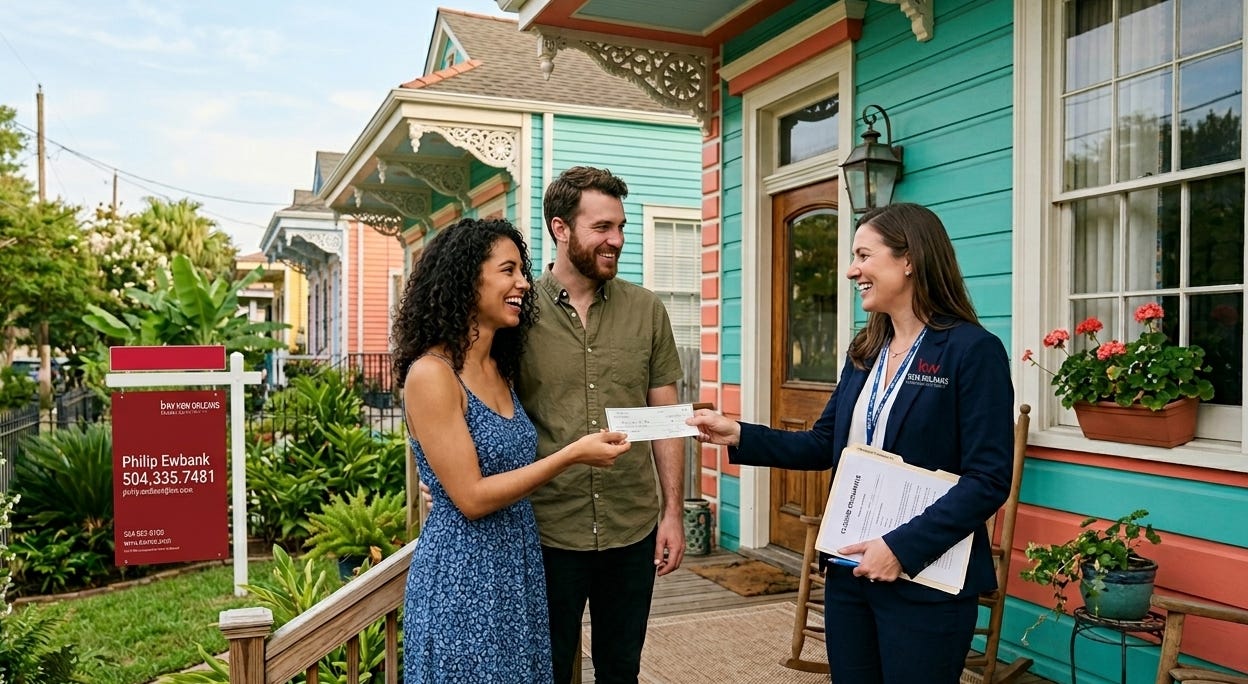
It’s a good-faith payment you make to show the seller you’re serious. Think of it as a deposit that says “I intend to buy this home.” It’s not the down payment, it’s a separate amount you put up when your offer is accepted. At closing, it gets applied toward your total costs.
How much is it?
There’s no required amount. It’s negotiated between buyer and seller. In New Orleans, 1–2% of the purchase price is typical. On a $300,000 home, that’s roughly $3,000–$6,000.
Who holds the money?
Not the seller. The buyer chooses where it’s held, with the listing brokerage, the buyer’s brokerage, or a third party like a title company. Most New Orleans transactions use a title company as the neutral holder. The money sits there until closing or until the deal falls apart.
When do you have to pay it?
Within 72 hours of the seller accepting your offer. Miss that window and you’re technically in default of the contract.
What happens to it if the deal falls through?
This depends entirely on why the deal fell through, and this is where Louisiana is actually more protective of buyers than most states.
You get your money back if:
Your home inspection turns up problems and you formally back out in writing within the inspection window (typically 10–14 days, negotiated upfront)
Your financing falls through and you made a genuine effort to get the loan
The home appraises for less than the purchase price and the seller won’t lower the price
The seller can’t deliver clean ownership of the property at closing
The catch: you have to act within the right timeframes and in writing. If the inspection window closes and you haven’t submitted a written termination or repair request, the contract treats you as having accepted the home’s condition. At that point your deposit is at risk if you walk.
What if you just change your mind?
If you back out of the deal without a valid reason covered by the contract, the seller can keep your deposit. It gets worse, under Louisiana’s purchase agreement, the seller can also pursue additional damages equal to 10% of the sale price on top of keeping the deposit. Most buyers don’t know that part.
One thing that surprises buyers at closing
Your deposit doesn’t disappear, it gets applied to your costs at closing.
But you have to tell your lender how to apply it: toward closing costs, your down payment, or your loan principal. If you don’t specify, some lenders default to applying it to principal. That can leave you short on cash at the closing table even though the money is technically accounted for. Confirm this with your lender and your closing attorney before closing day.
Have questions about drafting a Louisiana Purchase Agreement?