

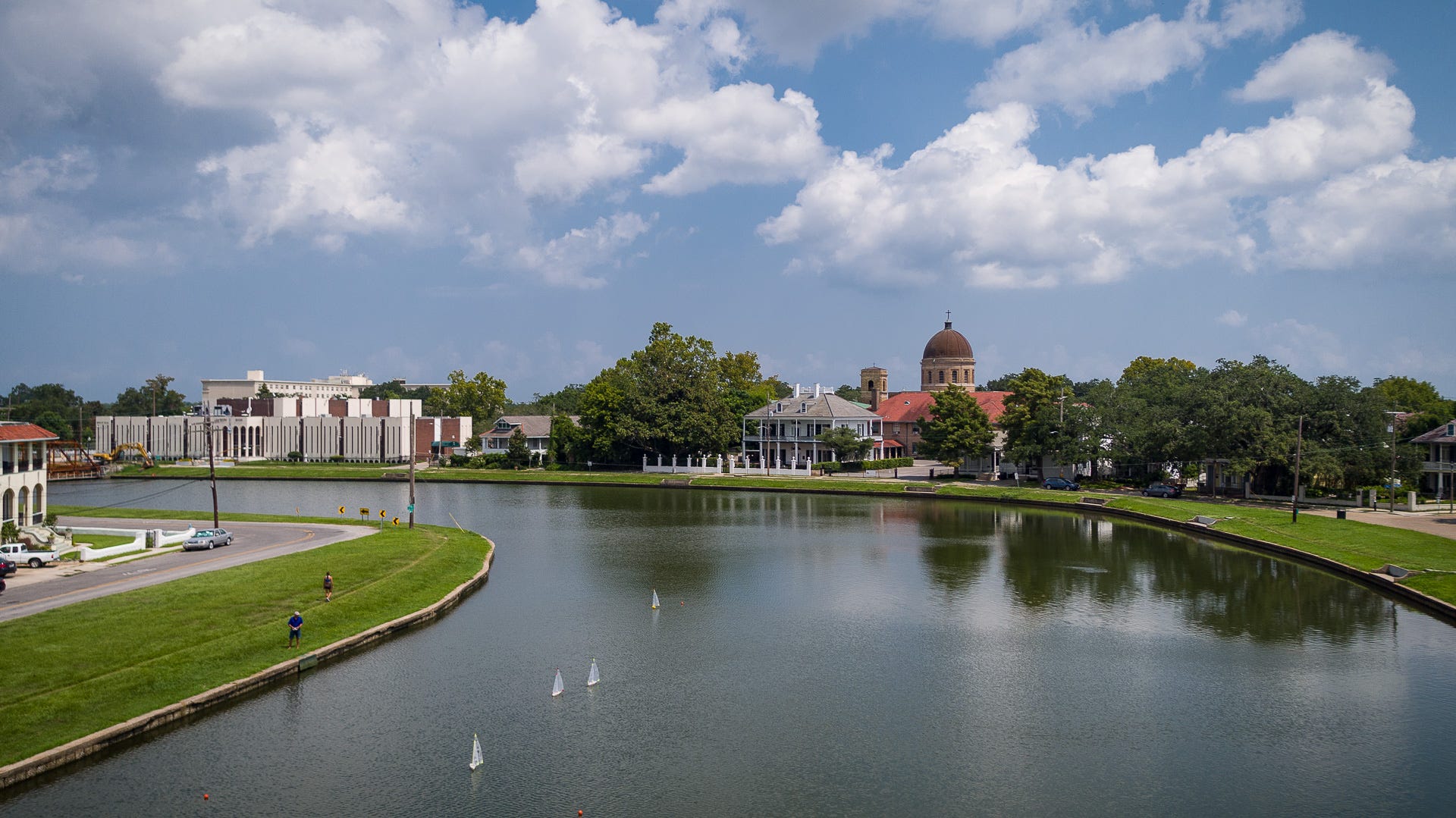
Most people assume Metairie Road and Gentilly Road curve the way they do because of poor city planning.
Actually, it’s the opposite. Those streets follow the exact path nature drew thousands of years ago.
Here’s what happened.
When a bayou forms, it doesn’t just carry water, it deposits sediment along its banks over time. That sediment builds up into natural levees. Higher ground. In a city that’s mostly below sea level, that high ground was everything.
So when Native Americans needed to move goods, they walked the ridges. When French colonizers arrived, they did the same. When developers eventually came, they built where people already were.
The bayou disappeared. The high ground stayed. The road followed.
Three bayous converged at Bayou St. John:
Bayou St. John itself (running north)
Bayou Metairie (now Metairie Road)
Bayou Gentilly (now Gentilly Road)
That intersection wasn’t an accident, it was the city’s original trade hub, used long before the French Quarter existed.
Next time you hit that weird curve on Metairie Road, you’re literally following a path that’s been in use for centuries.